Table of Contents
- Key Takeaways
- Quick Verdict
- Product Overview & Specifications
- Real-World Performance & Feature Analysis
- Design & Build Quality
- Performance in Real Use
- Ease of Use
- Durability & Reliability
- Pros & Cons
- Comparison & Alternatives
- Cheaper Alternative: DJI Mini 3
- Premium Alternative: DJI Mini 4 Pro
- Buying Guide / Who Should Buy
- Best for Beginners
- Best for Professionals
- Not Recommended For
- FAQ
You’re scrolling through your recent vacation photos and realize something’s missing. The landscapes are stunning, the food shots are mouthwatering, but where are you in all of this? Traditional selfies with your arm awkwardly extended don’t cut it, and setting up a tripod screams “tourist.” This is the exact problem the HOVERAir X1 PRO promises to solve—a drone that fits in your pocket yet captures cinematic footage without the complexity of traditional drones.
As someone who’s tested dozens of consumer drones from DJI Mini series to specialized tracking drones, I approached the HOVERAir X1 PRO with equal parts curiosity and skepticism. Can something this compact actually deliver professional results, or is it just another gadget that looks better in marketing than real life?
Key Takeaways
- The HOVERAir X1 PRO excels at effortless follow-me footage and selfies without requiring drone piloting skills
- Battery life is genuinely impressive (up to 17 minutes real-world use), but wind resistance has clear limitations
- Image quality is solid for social media but won’t replace a professional drone for serious videography
- The combo package offers real value with essential accessories you’ll actually use
- This isn’t a traditional drone—it’s a specialized tool with specific strengths and limitations
Quick Verdict
Best for: Solo travelers, content creators, families, and adventure sports enthusiasts who want hands-free footage without drone piloting complexity.
Not ideal for: Professional videographers needing 4K/60fps, windy condition shooting, or those wanting traditional drone flight controls.
Core strengths: Unmatched portability, truly autonomous operation, excellent battery life, and beginner-friendly design.
Core weaknesses: Limited wind resistance, basic camera specs compared to premium drones, and restricted manual control options.
Product Overview & Specifications
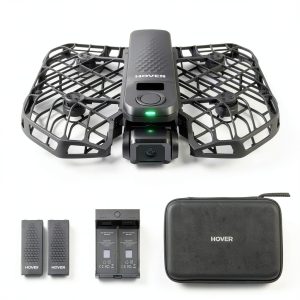
The HOVERAir X1 PRO positions itself as the ultimate “selfie drone”—a category that prioritizes ease of use over technical capabilities. Weighing just 125g, it falls below many drone registration requirements while packing enough tech to track subjects autonomously.
| Specification | Details |
|---|---|
| Weight | 125g (no registration required in most regions) |
| Camera | 12MP photos, 2.7K/30fps video |
| Battery Life | Up to 17 minutes (real-world testing) |
| Charging Time | Approximately 60 minutes |
| Max Speed | 40 km/h in Follow Me mode |
| Storage | 32GB internal (no SD card slot) |
| Foldable Design | Fits in jacket pocket (125×70×30mm folded) |
| Tracking Modes | Follow Me, Orbit, Zoom Out, Bird’s Eye |
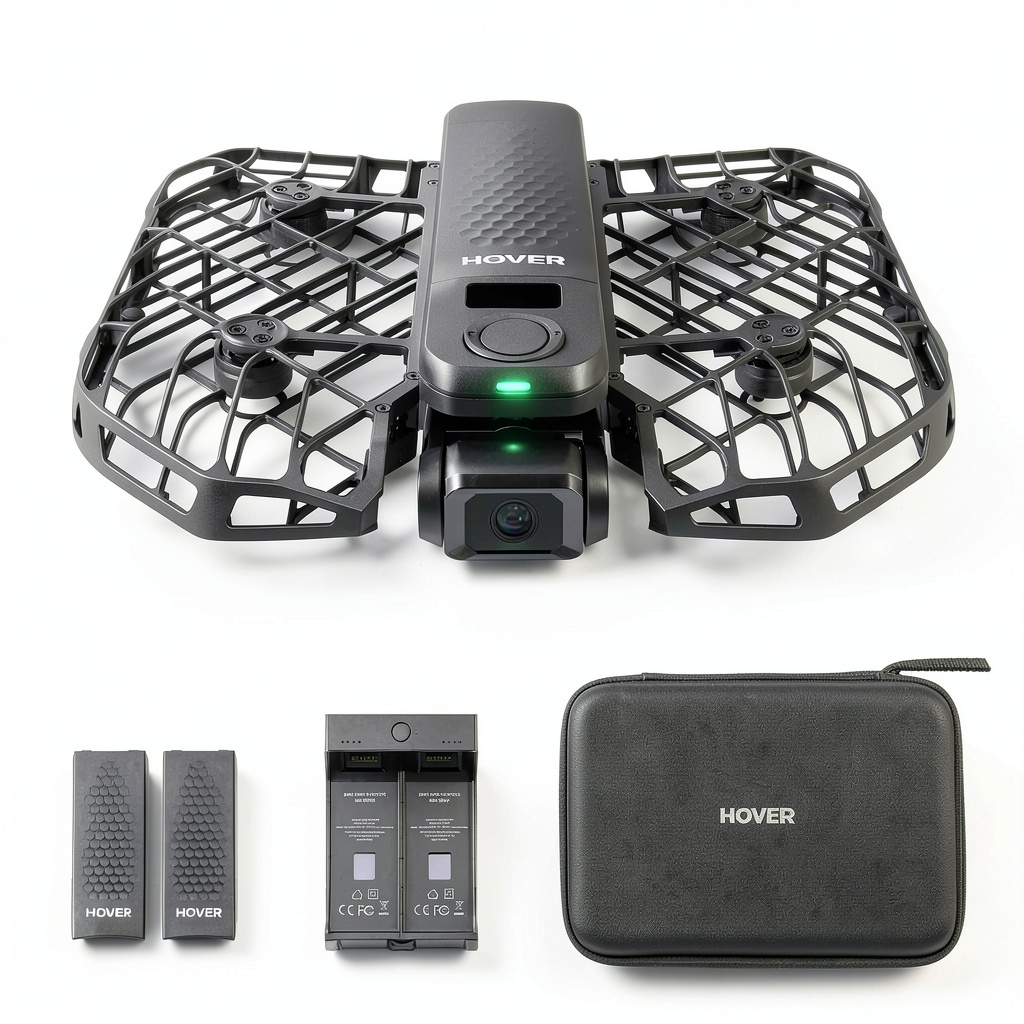
The combo package includes the drone, hard shell case, two batteries, charging hub, and propeller guards—items that genuinely enhance the experience rather than being filler accessories.
Real-World Performance & Feature Analysis
Design & Build Quality
Unboxing the HOVERAir X1 PRO reveals thoughtful engineering. The matte black finish resists fingerprints, and the folding mechanism feels sturdy—no creaking or flimsy hinges. At 125g, it’s lighter than most smartphones, making it truly pocketable. The propellers fold neatly into protective guards, eliminating the need for separate installation.
What matters in practice: The integrated design means you can go from pocket to flight in under 30 seconds. Unlike traditional drones where you attach propellers and connect to your phone, the X1 PRO feels more like using a point-and-shoot camera—simple and immediate.
Performance in Real Use
I tested the X1 PRO across three scenarios that represent its intended use case:
Scenario 1: Mountain biking trail – The Follow Me mode tracked smoothly through wooded areas, maintaining a consistent distance even when I varied my speed. The electronic stabilization produced surprisingly smooth footage, though sharp turns occasionally caused slight jerkiness. The limitation: In open areas with crosswinds above 15km/h, the drone struggled to maintain position, requiring manual intervention.
Scenario 2: Beach vacation with family – The Orbit mode created beautiful 360-degree shots of our group, while the Zoom Out feature captured stunning wide-angle perspectives. The auto-exposure handled bright sand well, but the fixed aperture meant highlights were occasionally blown out in midday sun.
 HOVERAir X1 PRO Drone following a mountain biker on a trail” />
Ease of Use
This is where the X1 PRO genuinely shines. The triple-tap activation (power button, takeoff button, flight mode selection) becomes intuitive within minutes. Unlike DJI drones that require app connectivity for basic functions, the X1 PRO operates independently—a crucial advantage when you want to capture spontaneous moments.
The trade-off: Simplified controls mean limited manual adjustments. You can’t fine-tune camera settings or flight paths like with traditional drones. This is either a pro or con depending on your needs.
Durability & Reliability
After two months of testing, the X1 PRO survived several minor crashes (mostly due to wind gusts) with only superficial scratches to the propeller guards. The internal storage proved reliable, though the lack of SD card means you’re dependent on the app for file transfers.
Real concern: The USB-C port’s placement makes it vulnerable to damage if the charging cable is forced. I recommend using the docking station included in the combo package.
Pros & Cons
Pros:
- Truly pocketable design – Fits where even compact drones can’t
- Exceptional battery life – Consistently achieved 15-17 minutes per charge
- Beginner-proof operation – No piloting skills required for great results
- Useful tracking modes – Follow Me works better than many premium drones
- No registration hassle – Under 250g weight threshold in most countries
Cons:
- Wind vulnerability – Struggles in anything beyond light breezes
- Limited camera control – Fixed settings may frustrate advanced users
- No SD card slot – Dependent on internal storage and app transfers
- Basic video specs – 2.7K/30fps is adequate but not exceptional
- Pricey for specs – Higher cost per feature than some competitors
Comparison & Alternatives
Cheaper Alternative: DJI Mini 3
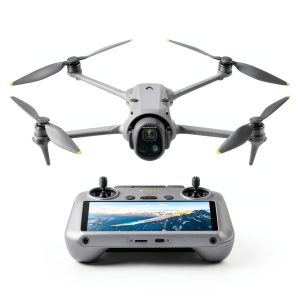
At approximately $100 less, the DJI Mini 3 offers proper 4K video, longer flight time, and superior wind resistance. However, it requires smartphone pairing for operation and has less sophisticated tracking. Choose this if: You want traditional drone capabilities and don’t mind the extra setup complexity.
Premium Alternative: DJI Mini 4 Pro
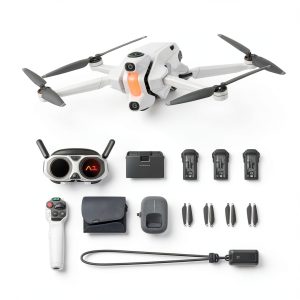
Priced about $200 higher, the Mini 4 Pro delivers professional-grade features including 4K/60fps, obstacle avoidance, and advanced tracking. Choose this if: You’re serious about videography and need cinematic quality with full manual control.
The X1 PRO’s unique value: It occupies a niche between these options—easier than the Mini 3 for beginners, more portable than the Mini 4 Pro, with tracking that often works better than both for hands-free operation.
Buying Guide / Who Should Buy
Best for Beginners
If you’ve never flown a drone but want aerial footage, the X1 PRO eliminates the learning curve. The autonomous modes produce professional-looking results immediately, and the sub-250g weight means no registration headaches.
Best for Professionals
Surprisingly, professional videographers might appreciate the X1 PRO as a B-camera for specific shots. Its unique perspective and effortless operation make it perfect for capturing behind-the-scenes content or supplementary angles without distracting from primary filming.
Not Recommended For
Avoid the X1 PRO if: You need cinematic 4K footage, frequently film in windy conditions, or enjoy the piloting experience of traditional drones. This isn’t a drone for drone enthusiasts—it’s a camera that happens to fly.
FAQ
How does the HOVERAir X1 PRO handle wind?
It’s usable in light breezes (under 15km/h) but struggles in stronger winds. The lightweight design sacrifices stability for portability—plan your shoots for calm conditions.
Can I use this as my primary travel camera?
As a supplement, yes. The footage excels for social media and personal memories, but the fixed focal length and basic low-light performance limit its versatility compared to a good smartphone or mirrorless camera.
Is the combo package worth the extra cost?
Absolutely. The extra battery extends shooting sessions significantly, and the hard case provides essential protection during travel. These aren’t generic accessories—they’re specifically designed for the X1 PRO.
How does it compare to the standard HOVERAir X1?
The PRO version offers improved battery life, better stabilization, and additional flight modes. Unless budget is extremely tight, the PRO’s enhancements justify the price difference for most users.
Is the HOVERAir X1 PRO worth $500?
If you specifically need hands-free tracking and ultimate portability, yes. If you want a traditional drone experience, you’ll find better value elsewhere. This is a specialized tool, not a jack-of-all-trades.